CheckMate Blog

  • Categories

  • Archives

  • Reset
Protecting your employees and keeping your business operational is now more important than ever. Outbreaks of coronavirus or influenza can ... Read more

If your business is like ours, when COVID-19 hit, you looked at how you could continue operate without putting your ... Read more

You and your company have committed to ensuring the safety of all employees and through CheckMate, the safety of employees ... Read more

What happens when employees Working Alone or Working in Isolation are not checked on? This answer can be summed up in ... Read more

Lone workers represent a significant portion of the workforce with approximately 25 – 49 million employed lone workers worldwide. It ... Read more

To reduce the potential for injury or disease you need to control the risk. The most effective way to do ... Read more
Winter is a time for the holidays, and it’s also a time to take extra caution to keep your employee’s ... Read more
Do you know that being a lone worker is not necessarily a full-time job? For example, a worker might work ... Read more
The Canadian workforce is aging, and an aging workforce means aging employees in the workplace. According to the Canadian Centre for ... Read more
Are your employees being checked on at regular, scheduled intervals? Is there documentation of these safety checks for auditing purposes? ... Read more

Protecting your employees and keeping your business operational is now more important than ever. Outbreaks of coronavirus or influenza can cripple a business, causing daily financial losses as facilities are closed for cleaning, or suffer a drop in the productivity of staff as they become ill and must quarantine. By now you likely have made certain decisions about how to proceed with business or facility operation in 2020. Many businesses have moved their employees to work from home, which requires meeting Federal and Provincial regulations for lone workers. For businesses that are able to remain open with staff onsite, extra cleaning measures, plexiglass barriers, and masks are all part of a comprehensive outbreak prevention plan.Are you also routinely testing for a primary symptom of infection, an elevated body temperature, also known as fever? Do you know the important differences between detecting skin temperature and core body temperature?Fever is a primary indicator of infection, such as Covid-19 or the seasonal flu. Detecting an elevated body temperature at the entrance to a property can help to reduce the risk of outbreaks, as anyone found to have a fever can be prevented from entering. Many businesses are attempting to screen for elevated body temperature using handheld devices, but these have many drawbacks:

  • Requires staff to intercept and scan possibly-infected individuals, increasing the risk of close-proximity transmission and preventing staff from attending to other duties
  • Handheld temperature screening devices acquire a skin temperature reading, which does not provide an accurate indication of fever and can be easily affected by many external and environmental factors.

What is the difference between measuring skin temperature vs. core body temperature?

Skin temperature is only a measurement of external temperature, which can be affected by:

  • Cold or hot weather
  • Direct sun
  • Clothing, particularly winter gloves, hats and coats
  • Recent activity level of an individual

Core body temperature provides a far more accurate reading of whether an individual’s body temperature is elevated and might be infected and contagious. Acquiring a contactless, reliable core body temperature reading provides far more protection when implemented as part of a comprehensive outbreak prevention plan.

So how can an efficient, cost-effective and safe core body temperature reading be achieved?

The CheckMate EBT Sensor is a hands-free, contactless, precise device that reads core body temperature and can be integrated to work with door access controls and 24/7 monitoring services.

  • By scanning the inner canthus of the eyes where arteries run closer to the skin’s surface, an accurate body temperature reading can be acquired.
  • The EBT Sensor is contactless, minimizing the risk of contact or close-proximity contamination.
  • Elevated Body Temperature screening with the EBT Sensor is fast and efficient, and measurements can take less than 1 second per person.
  • Access control integration options allow the sensor to interface with doors or turnstiles.
  • No staff are required to operate the sensor and readings are initiated automatically.
  • The CheckMate EBT Sensor can be monitored 24/7 by ProTELEC, providing alerts and immediate responses when a fever is detected. This allows you and your employees to focus on other tasks, saving time and money.

Want to learn more about adding an integrated and hands-free temperature monitoring option to your outbreak prevention plan? Check out one of our informational videos or contact us for more information.

If your business is like ours, when COVID-19 hit, you looked at how you could continue operate without putting your employees and customers at risk. Implementing physical distancing between employees, sanitizing work areas many times per day, ultimately mandating masks, and identifying employees that could work remotely within our office and at home were a few of the steps that we have taken.

According to a recent survey by Statistics Canada, nearly one-third of businesses report that their employees are working remotely during the pandemic lockdown. That’s almost twice the level reported before the lockdown began.

The COVID-19 lockdown has become synonymous with working from home for many people and some of these changes are here to stay.

What has been inadvertently overlooked in our efforts to minimize the risks of the employees catching Covid-19 by having them work remotely or from home, is that we have increased the risks that employees now face due to working alone or in isolation.

As employers, we are responsible for the safety of our employees, but does this responsibility carry over to employees working from home?

A quick review of Provincial websites regarding this question finds similar responses from the Provinces. To give you a sense of how the Provinces view an employer’s responsibility for employees working from home, below is what is found on the four western Provinces websites:

Province of Manitoba

Many safety and health roles, rights, and responsibilities are just as applicable for at-home workers as they are for more traditional workplaces, including:

  • Reporting workplace injuries
  • Requirements for education and training
  • Worker’s duty to follow safe work procedures
  • Furthermore, check-in and other procedures are required if the worker is working alone or in isolation

Province of Saskatchewan

Key health and safety requirements when working from home

Many health and safety roles, rights and responsibilities are just as applicable for at-home workers as they are for more traditional workplaces, including:

  • Reporting workplace injuries.
  • Requirements for education and training.
  • Worker’s duty to follow safe work procedures.
  • Requiring check-in and other procedures if the worker is working alone or in isolation.

Province of Alberta

Develop a working from home policy that includes:

  • Communication between employer and worker.
  • Availability of tools and technology to enable staff to work remotely.
  • Protocols to protect workers’ health and safety.
  • Contact with customers, if applicable (for instance, practices that limit direct contact).

Province of BC

The Occupational Health and Safety Regulation requires all B.C. employers to establish check-in and other procedures to protect employees working alone or in isolation, whether in the field or in an office. If you answer “Yes” to any of the following situations, your supervisor needs to create a check-in procedure.

  • Do you work alone in your home office?
  • Do you work alone for periods of time, including before or after normal working hours?
  • Do you work away from your regular work location to meet clients or regulatory staff or social workers?
  • Does your position require you to be in remote areas? For example, to conduct inspections in the field?
  • Do you work in places isolated from public view where you are at risk of violent attack? For example, enforcement officers in correctional facilities, or social and health care workers visiting clients in their homes.

The common theme amongst the Provinces is that Employers are responsible for the safety of their employees, wherever they are working and if they are working alone or in isolation, there must be a check-in process in place.

In addition to the above, to determine if working from home is considered to be working alone, we must consider the Provincial definitions of Working Alone:

Province of Manitoba – The Workplace Health and Safety Act

“working alone” means the performance of any work function by a worker who:

  • is the only worker for that employer at that workplace at any time; and
  • is not directly supervised by the employer, or another person designated as a supervisor by the employer, at any time.

Province of Saskatchewan – Working Alone Occupational Health and Safety Regulations

Reg 1 Part III General Duties Section 35

  1. (1) In this section, “to work alone” means to work at a worksite as the only worker of the employer or contractor at that worksite, in circumstances where assistance is not readily available to the worker in the event of injury, ill health or emergency.

Alberta Occupational Health and Safety (OHS) Part 28, Working Alone requirements

Definition:

A worker is considered to be working alone if they work alone at a work site where assistance is not readily available.

British Columbia Working Alone or In Isolation 4.20.1 Definition

“to work alone or in isolation” means to work in circumstances where assistance would not be readily available to the worker

  • in case of an emergency, or
  • in case the worker is injured or in ill health.

Based on this review of the Provinces, the definition of ‘working alone’ varies slightly from Province to Province with a strict definition of  working alone beingbased on whether there are any other workers on site to a more relaxed definition based upon assistance being readily available.

So back to the question we started with; Is Working from Home, Working Alone? The answer is; ‘it depends’ upon the Province in which you are doing business. Nevertheless, from a best practices perspective and to minimize your risks as an employer with employees working from home, it is prudent to assume that they are working alone, that you need to check on them regularly, and you need to document all check-ins.

As we recognize and appreciate this challenge, especially during the pandemic, we are offering a Working from Home option for you – Checkmate-Working Alone with special pricing. This service offering safety checks will work with any type of communication set up:

  • Land line,
  • Cell phone
  • Computer
  • Tablet or iPad

Please contact us for more information, and we’ll help you with a solution that best fits your needs.

CheckMate Dashboard – The Key to Ensuring Your Lone Workers Are Protected

You and your company have committed to ensuring the safety of all employees and through CheckMate, the safety of employees that work alone. We want to thank you for that commitment, and we want to ensure you are getting the most from it. Your employees also share in that responsibility and need to use the safety tools provided to them.


To confirm that your staff who are working alone are using CheckMate when they should, we have developed the CheckMate Dashboard. As a CheckMate Administrator, you have access to it 24/7/365. Please contact us if you do not know your User ID and Password. This Dashboard will, at a glance, provide you with key information regarding how often your employees are using CheckMate.

Details of a lone worker’s Safety Checks are listed on their User History page, with the ability to search by date range and type of event.

The CheckMate Working Alone suite of services and tools provides you with complete hands-on control over the administration of Safety Checks for your employees. We also provide full administrative support, and can assist in new employee setup, schedule management and reporting. For further discussion of the Safe Alone App and Dashboard tools, please view our webinar “How to get the most out of your CheckMate Working Alone tools” and contact us with any questions.


What happens when employees Working Alone or Working in Isolation are not checked on? This answer can be summed up in one unfortunate word: “_______”

I will start off this article with the above question and save the reveal for the end. I’m sure you won’t be too surprised by the answer, but before we get to it, allow me to digress.

Have you ever noticed that what may have been widely accepted in the past, when viewed through the lens of today, seems almost unbelievable? These situations seem to be occurring a lot more often for me in recent years, and probably has something to do with all the added grey hair on my head. It is fun to have these discussions with your friends and colleagues and to hear all of the examples, which inevitably come back around to “Wow can you believe that was allowed”? How about “smoking on an airplane or in an office”, or “not wearing a seatbelt in a car” or “working on a construction site around heavy equipment, where a reflective safety vest and a hard hat were nowhere to be seen” –  you can go on and on with these sorts of examples!

I will tell you a story from my days in manufacturing. Years ago, one of our steel plants had a fellow working on an elevated platform on what we called our “Recor Machine”. The machine was all steel and there were moving parts all around. Although some railings were in place, by today’s standards these certainly would not have been adequate. There were a few other people working in the plant, however the work stations were spaced out and people could not visually see each other from where they worked. Lastly, the equipment was very loud and people could not hear each other from where they worked as well.

It was an average day in the plant, and our fellow was working on the “Recor Machine”. However on this day he tripped while on the elevated platform and fell approximately 1m (3’) to the ground striking his face across a steel a bar. At that time our company had no Working Alone policy or procedure in place AND we had no system set up of checking on this person who was working in such an isolated location in the plant.

So what happened? Well, as you probably know by now, the truth is “Nothing” happened and it was only when the worker eventually regained consciousness and stumbled into the supervisors office, bleeding, face cut open with a broken nose, that he was finally rushed to the hospital for medical attention. It was never known how long this fellow laid by his machine needing help and certainly it was only by luck that a much worse outcome did not occur.

Circling back to the theme of my original question, it is commonly agreed upon by our healthcare professionals that when incident occurs and someone experiences a medical emergency, quick response and early medical intervention is critical. This is certainly well known and verified in articles like that from the Royal College of Physicians and Surgeons of Canada which states “Research shows that early medical intervention and management of patients can dramatically improve critical event outcomes.”

This leads to the question of ensuring safety in the workplace, particularly the safety of lone workers.  How can organizations and managers provide timely assistance to their staff when incidents occur?

  • Perform routine risk and hazards assessments of the work environment
  • Develop and implement safe work procedures
  • Provide comprehensive safety training for all employees and managers
  • Implement a consistent and reliable method of checking on people who are Working Alone or in Insolation – this is the ONLY way we can ensure timely assistance when an incident occurs.All of these measures would certainly would have helped my old colleague back in the days of working on the “Recor Machine”.

CheckMate Working Alone is a amazing piece of technology that helps organization provide Safety Checks for people Working Alone or Working in Isolation. It is a very reliable, user-friendly and cost-effective Solution! CheckMate also provides a complete audit trail for proof of due diligence ensuring your organization meets all legislative requirements.

I am so glad that the world has changed and we are continuing to evolve our concepts of safety, where the number-one priority for an organization is the fact the every employee has the right to a safe and healthy work place each and every day they come to work. Not only do organizations and managers have an obligation to provide a safe workplace, it is in fact the law!

So what happens when someone who is Working Alone or Working in Isolation is not checked on? Sadly, the answer is “Nothing”;  nothing will happen and doing nothing is not acceptable in today’s world. When we look back on how things were done in the past and how unbelievable these examples are, know that there are simple solutions to solve these challenges today.

To learn more about the CheckMate suite of Lone Worker safety services and products, please visit our website or contact us for more information.

Lone workers represent a significant portion of the workforce with approximately 25 – 49 million employed lone workers worldwide. It seems to be a surprisingly large number at first glance, but a closer look shows that if you examine the broad range of industries that are encompassed along with the various work situations that can arise, the numbers highlight the number of workers at risk and the significant potential cost to employers if those workers are hurt or injured.

Cost of Lost-Time Injury

• It costs the world’s employers $1.25 trillion USD in lost-time injuries yearly.
• On average, it costs an employer $85,000 CAD yearly after a lone worker is injured on the job (this includes compensation, benefits, lost productivity, re-hiring and training)
• It is estimated that for every health and safety program implemented to protect lone workers saves $4-6 CAD for every dollar invested.
• It is estimated that every two minutes a lone worker is injured on the job (this includes minor injuries like paper cuts, major injuries like broken bones, and fatalities)
As a result, there is an emerging urgency for employers to find innovative ways to provide a higher level of security that goes beyond the introduction of a new piece of technology and is more than just an app.

CHECKMATE Working Alone is a proactive, automated communications service designed to check on people who are working alone. It’s a simple-to-use, flexible, cost-effective solution for employee safety.

• It’s simple to use. CHECKMATE places a call to the lone worker according to the schedule that you provide, and control. If that call goes unanswered, an alarm is immediately triggered in our Emergency Monitoring Centre and one of our trained and certified operators coordinates the appropriate emergency response.
• No hardware or software to purchase. CHECKMATE is a service, and all your employees need is a telephone – landline, cell phone, smartphone or satellite phone.
• 24/7 monitoring. Our Emergency Monitoring Centre operates around the clock and both our operators, and our facility, have met or exceeded the highest level of certification available in the industry.
 Trained professionals. All our operators must undergo rigorous training and education to qualify to work in ProTELEC’s Emergency Monitoring Centre, certified ‘Five Diamond’ by the Central Station Alarm Association (CSAA), an organization whose mandate is to maintain the highest standards of excellence in the North American alarm industry.
• Advanced technology. Our Emergency Monitoring Centre is ULC-listed to confirm that it meets demanding requirements for architectural and physical security features as well as emergency power, computer hardware and software. In addition to ensuring the calls are made and receipt of the calls is confirmed, CHECKMATE can also provide an audit trail of all the calls and outcomes for your records. Weekly reports can be sent directly to you or accessed through our secure website.

To arrange for your Free Assessment and Free 15-Day Trial, please contact us.

To reduce the potential for injury or disease you need to control the risk. The most effective way to do this is to eliminate the risk whenever possible. Can the work be done at a different time? Is there a safer process?

If that is not possible, there are other ways to help reduce the risks of working in cold weather:

Education: Workers and supervisors should be educated about the symptoms of exposure to severe and emergency procedures in the case of injury due to cold weather.


wokerModification to Work: Making physical modifications to facilities, equipment and processes to reduce exposure. For example, reschedule work to the warmest time of the day. Take frequent short breaks in warm, dry areas.


wear jacketPPE: Avoid cotton and goose down to help prevent hypothermia. To work comfortably make sure to put on an extra layer of clothing. Mitts are warmer than gloves. Wear a winter toque – 30 to 50% of body heat is lost through the head.


water-bottle Your Body needs Fuel: Working outdoors requires your body to produce heat to keep you warm so eat up! Hydration is essential to keep you warm, drink on average 4 litres of fluid per day. Avoid drinks with caffeine and alcohol.


safety-checksSurveillance and Monitoring: The temperature should be monitored every 4 hours, so workers are aware of changes in temperature. Regular safety checks should be in place. For more information on lone worker monitoring solutions, contact one of our Lone Worker Safety Experts.

If your duties require travelling in cold weather, make sure your vehicle is in good working order. Have a cold weather safety kit in your vehicle.

Being prepared for working in cold weather conditions will help minimize the risks and allow you to be more productive.

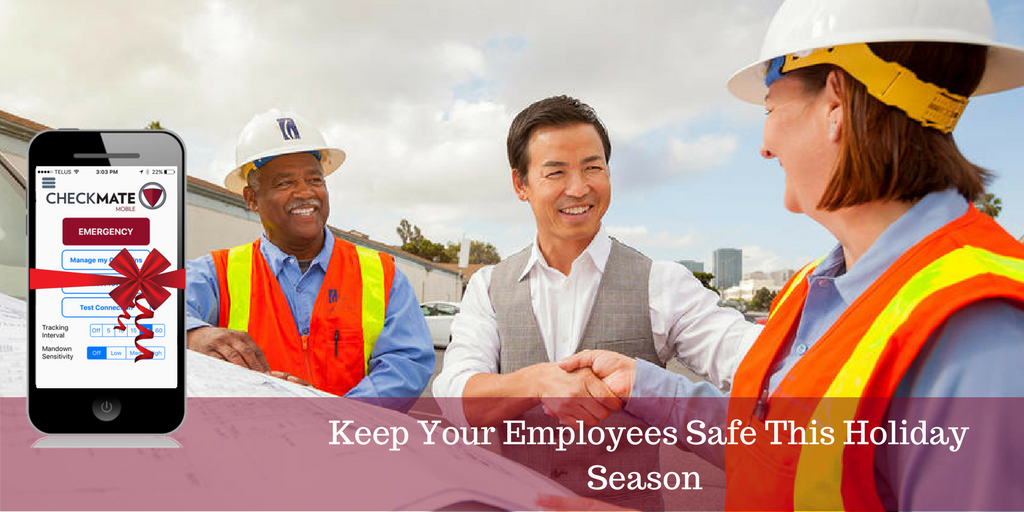
Winter is a time for the holidays, and it’s also a time to take extra caution to keep your employee’s safe! Statistics show that workplace injuries spike around winter. Each year thousands of workers are injured at work due to slippery surfaces as a result of snow and cold weather. Although slips and falls happen all year around, there is a spike in the number of fall injuries during the winter.

An injured worker means a decrease in productivity which is the last thing you need during a busy holiday season. According to the WCB Nova Scotia, “more than 1200 workers lost time from work last year after they slipped, tripped or fell while working.” The average work loss due to a fall-related injury is 61 days. Therefore, it’s important to consider health and safety risks around the holiday season. Employers can take precautions to help prevent workplace injuries by addressing workplace hazards. For employees that work alone, it’s essential to have a lone worker monitoring solution that confirms their safety when no one else is around.

CHECKMATE Working Alone can help employers protect their employees working alone, and confirm lone worker safety by making sure they get immediate help when necessary.

CHECKMATE WORKING ALONE‘s primary goal is to provide the most effective system for lone workers in any capacity. No matter the size of the business or the industry.

For more information on CHECKMATE Working Alone, contact one of our Employee Safety Experts!

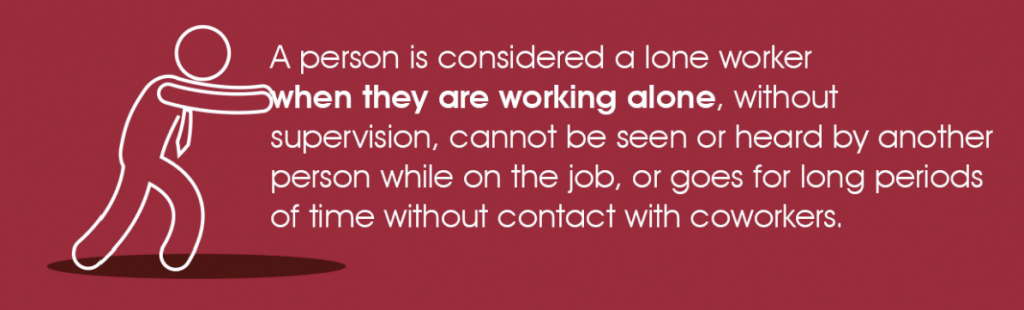
Do you know that being a lone worker is not necessarily a full-time job? For example, a worker might work in the office with other coworkers for most of the day, however, is considered a lone worker when they leave for site visits to areas where there is no supervision and has no contact with co-workers.

Did you know that a person is considered a lone worker when:

  • They are working without supervision.
  • Can’t be seen or heard by others while on the job.
  • Goes for long periods of time without contact with coworkers.

You might not realize that employees working in isolation tend to be more vulnerable than employers that have coworkers present. In the case of an emergency, lone workers have no way of getting help. For example, in the event the worker is unconscious, not getting help right away can result in serious consequences.

Lone workers are also at a heightened risk of violence at work! An employee working alone might be more vulnerable if they were dealing with an angry or abusive customer. Therefore, it’s important to have lone worker monitoring in place confirming lone worker safety. CHECKMATE Working Alone involves regular check-ins ensuring that the employee working alone is safe.

As an employer, you must provide a safe workplace for all workers. Therefore, you must identify if you have a lone worker. You must determine if assistance is readily available for the lone worker in your workplace. You should ask the following questions:

  • Are other people in the vicinity?
  • Are those people aware of your worker’s need for assistance?
  • Are they willing to provide assistance?
  • Are they able to provide assistance in a timely manner?

Our CHECKMATE Working Alone monitoring system allows you to ensure your workers are safe. To find out more about how CHECKMATE Working Alone meets work alone legislation and how it can help you avoid spending unnecessary amounts of funds or travelling to their location for physical check-ins, contact one of our lone worker experts today!


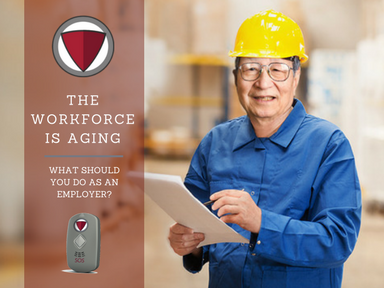
The Canadian workforce is aging, and an aging workforce means aging employees in the workplace. According to the Canadian Centre for Occupational Health and Safety; one in four workers in Canada could be an aging worker. So, what does an aging workplace mean to organizations?

  • Taking extra caution, as older employees might be prone to falls due to poor balance, slower reaction time and visual impairment.
  • New safety measures in the workplace in case of medical emergencies, due to health problems, such as diabetes, hypertension or osteoporosis. Aging workers may need fast assistance in times of a medical emergency.
  • Consider redesigning the workplace to avoid injuries that may take longer to recover from.

Extra Caution

Employers need to understand that with age, workers may have physical and psychological changes occur which may affect their performance. However, an aging employee does not mean that they’re not capable of performing their day-to-day functions. It means that they need a different routine, and perhaps a different pace at which they can optimize their daily experience.

The fact of the matter is that you cannot expect a 25-year-old employee and a 55-year-old employee to perform at the same level and speed. Both employees bring different skills and assets to the workplace. Older employees mean experience, knowledge, and expertise.

New Safety Measures in the Workplace

Your workplace also needs to grow and develop to fit the needs of your aging employees better. Employers must recognize the safety implications associated with aging workers. A proper assessment of physical effects that the work might have on older workers is necessary by the employer to avoid workplace injuries.

Redesign of the workspace

With a little advanced planning, older employees can continue to be productive in the workplace. Employers must give special consideration to aging workers to ensure their safety and maintain productivity. To minimize distractions, employers can consider a workplace redesign. Reconstructing a working environment may cost the organization money, however, an injured employee that takes longer to recover may cost the employer more in the long run.

What Can Employers Do?

As an employer, you have the responsibility to keep employees safe and conduct risk assessment procedures that take into consideration specific employee’s needs to be safe at work.

Educate employees and provide training on what to do in case of an emergency. Educate aging workers on how to avoid workplace injuries.

Develop safe work procedures to help prevent injuries or emergencies. Providing employees with mobile alert pendants, such as CHECKMATE SOS can help them in the event of an emergency. CHECKMATE SOS can be used for any employee and can travel with them wherever they go. For more information, please click here.

For more information on CHECKMATE SOS contact us today!

Your Safety And Your Employee’s Safety Matters!

Are your employees being checked on at regular, scheduled intervals? Is there documentation of these safety checks for auditing purposes? If not, you may not be compliant with Provincial Legislation.

Legislation  

Did you know that there is a Working Alone legislation?

Are you aware that there must be regular communication with employees while working alone?

Employer’s Legal Obligation

As an employer, you must identify the risks arising from the conditions and circumstances of the employee’s work. As well as, develop and implement safe work procedures to eliminate or reduce any identified risks to workers working alone or in isolation.

Can Help Protect You And Your Employees

CHECKMATE Working Alone is a proactive, automated, communications service designed to check on people working alone to ensure their safety.

Provinces And Territories Regulating Working Alone

The following provinces in Canada regulate working alone:

  • Alberta
  • British Columbia
  • Manitoba
  • New Brunswick
  • Newfoundland
  • Prince Edward Island
  • Saskatchewan

Here Are Some Things You Should Know…

A lone worker is someone who:

  • Is working alone
  • Does not readily have access to assistance if there is an emergency or worker is ill or injured
  • Travels away from the office for work
  • Works alone at an isolated site

Employers must provide an effective communications system that includes one of the following:

  • Radio communication
  • Telephone communication
  • Some other effective means of electronic communication
  • A system of regular contact by the employer with the worker working alone or in isolation

Requirements  

  • Must be an effective communication system
  • Must be a reliable source of communication
  • Employer must provide audit records
  • An employer must generate regular reports

CHECKMATE Meets Requirements

  • Working Alone is an effective communication system
  • 100% reliable
  • Provides audit trails
  • Generate weekly and monthly report