
By the CheckMate monitoring team, ProTELEC.
Most of Canada’s working alone rules were written when a safety check meant a phone call or a radio. British Columbia’s have been on the books since 1998 and were tightened in 2008. Alberta has required employers to have a way of reaching lone workers since 2000. Not one of these rules mentions an app, and the obligation they describe has not moved an inch: know where your lone workers are, confirm they are safe at intervals that match the risk, and have a plan for the moment they go quiet.
What has moved is everything around that obligation. The tools, the expectations of the people wearing them, and the questions a safety manager gets asked after an incident.
We spend our days inside this, from a monitoring centre in Winnipeg that has been answering alarms since 1968 and monitoring lone workers since 2003. So this is our read on where lone worker protection is going in 2027 and the years after it. Some of it is about the industry. Some of it is about what we are building. We have tried to be clear about which is which.
Where things stand going into 2027
Almost every organization with people working alone now has something in place. Ten years ago the gap was awareness. Today the gap is quality.
The most common setup we see is a smartphone app that sends automated safety checks and, when one is missed, texts a supervisor. On a normal Tuesday that works. The trouble shows up in three places, and the same three come up in nearly every conversation we have with a safety manager shopping for a replacement.
First, the safety check is annoying to do. Pull out the phone, unlock it, find the app, tap. For someone in gloves, on a ladder, or in the middle of a patient visit, that is five motions for a one-second task, and after a few weeks the phone goes on silent.
Second, a missed safety check lands on whoever happens to be awake. If the supervisor is asleep, driving, or looking at a different notification, the alert is a line in a log.
Third, nobody has planned for the night when the whole contact list goes unanswered. It is rare. It is also the scenario that ends up in a coroner’s report.
Every shift below is the industry responding to one of those three problems.
Shift 1: The safety check leaves the phone
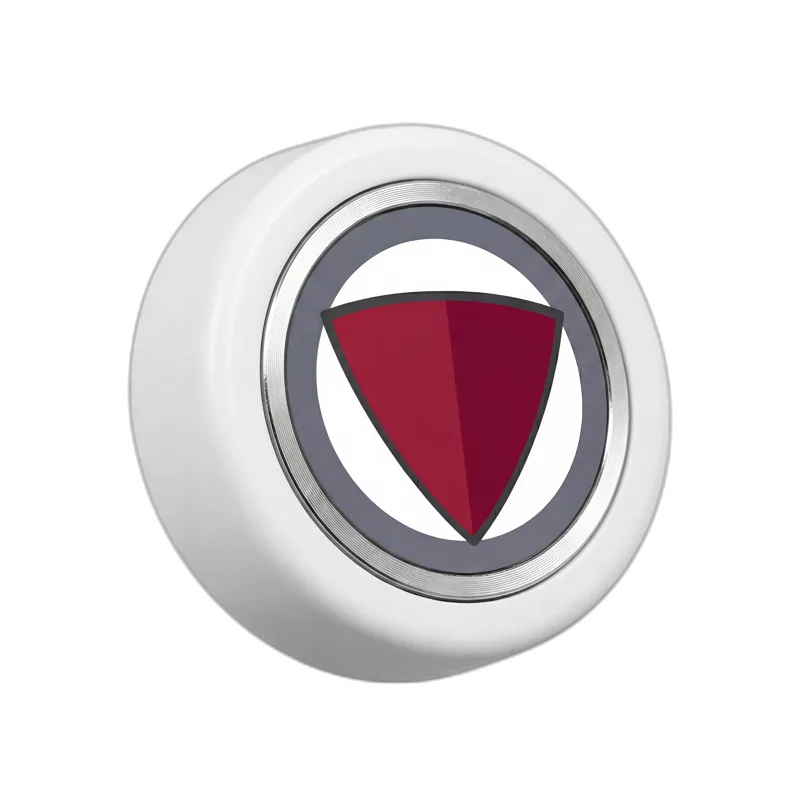
The CheckMate Smart Button. One press confirms a safety check; press and hold sends an alarm.
Worker feedback across industries is remarkably consistent: the check itself is fine, reaching for the phone is what gets in the way. So the check is moving onto the body. Wearables that confirm with one press, without unlocking anything, are going from novelty to default, and by the end of 2027 a lone worker program without a hands-free option will look dated.
This is where the Smart Button sits. The CheckMate Smart Button is a small Bluetooth button that pairs with the Safe Alone app and clips to a lanyard, vest, or belt. When a check comes due, one press confirms it. If something is wrong, pressing and holding the same button sends an emergency alarm with GPS coordinates to our monitoring centre, so one button covers both the routine check and the emergency. The battery lasts about three years and there is no IT setup.
A few honest notes, because we would rather you hear them from us. The Smart Button works through the phone, so the worker still carries one; the button means they never have to touch it. And we do not yet have hard data on how much more often workers complete their checks with it. The logic is obvious, one motion instead of five, but we will publish numbers when we have them, not before.
Shift 2: Monitoring becomes the product, and the app becomes a tool
For a decade the category has been sold as “lone worker apps.” That framing is starting to break, and it should.
An app is a way to run safety checks and raise an alarm. It is not a response. The response is what happens in the thirty minutes after a check is missed, and that is where providers differ most. Many lone worker apps do not include a monitoring centre at all, or offer one as a paid add-on buried in the pricing page.
This is why we describe CheckMate as a safety monitoring service rather than an app. The Safe Alone app is the tool workers use. Behind it is our Emergency Monitoring Centre in Winnipeg, with 24/7/365 human monitoring by trained operators whose job is to respond when a check is missed or a worker calls for help. The same team handles security and fire alarms, and the centre was the first in Canada to earn Five Diamond certification from The Monitoring Association.
Here is what that looks like when a safety check is missed. An alarm opens on an operator’s screen with the worker’s name, schedule, last known location, and the emergency contacts their employer wrote down. The operator calls the worker directly. Most alarms end there, with a forgotten tap or a shift that ran long. If the worker cannot be reached, the operator works the employer’s contact list in order, sharing the worker’s GPS location and the details of the alarm. The designated contacts decide what happens next, including whether to involve emergency services. Every step is logged with a time stamp.
That sequence is the whole product. The app is how the worker reaches it. The full breakdown is in our lone worker monitoring guide.
Shift 3: The escalation list gets a last step
Every monitored lone worker program relies on a contact list. Most of the time it works. Occasionally it does not: the supervisor is on a flight, the backup is on vacation, the store manager’s phone is on silent at 11 p.m. The worker is still unaccounted for, and the operator has run out of people to call.
Until recently the only answer in the industry was to keep trying the list. We think 2027 is the year that stops being acceptable, and it is the reason we added a step.
With the Guard Wellness Check, when every designated contact has been tried and nobody can be reached, the same operator who has been working the alarm dispatches a licensed security guard to the worker’s last known location. The guard attends, looks for the worker, and reports back to the operator, who records the outcome and keeps the employer’s contacts informed.
Two things matter about how we built it. It is the last step, not the first; everything before it is the standard sequence above, with timings the employer sets. And it is the only dispatch CheckMate makes. We do not call police, fire, or ambulance on anyone’s behalf. Nobody knows yet what is wrong, so a person is sent to find out, and any emergency response stays with the employer’s contacts and the people on site. It is an optional add-on, and it closes the gap that bothered us most.
Shift 4: Detection for the worker who cannot press anything
A button only helps a worker who can reach it. It does nothing for someone unconscious at the bottom of a ladder.
Automatic fall and no-motion detection is improving quickly, and we expect more procurement documents to ask for it in 2027, particularly for work at height, in confined spaces, and in remote areas. Where a fall is the realistic worst case, it is worth asking for.
It is a second layer, though, not the first. The backstop that covers every worker on every device is the scheduled safety check itself. If a check is not confirmed, an operator starts calling. A program that only reacts when a worker raises an alarm has nothing to catch the worker who cannot raise one.
Shift 5: Connectivity stops being an excuse
“Our people work where there is no signal” has been a reason to do nothing for a long time. It is running out of road.
Satellite devices that confirm a check from anywhere are now a normal option to quote for oil and gas, forestry, and utility crews. At the other end, the humble phone call is still doing quiet work: our Phone Safety Checks run on any phone that can receive a call, including a landline in a plant room or a satellite phone on a cutblock. The worker answers, enters a four-digit PIN, and the timer resets. No app, no training.
The point for 2027 is that a program should fit the worker’s actual conditions, not the other way around. A good provider offers several ways to complete the same check, with the same response behind all of them.
Shift 6: Proof replaces policy
After an incident, nobody asks to see the policy. They ask what happened, in order, with times.
Regulators in the eight provinces with explicit working alone provisions already expect employers to assess the risk and keep regular contact at intervals that match the hazard, and several of them, British Columbia and PEI among them, require a written procedure and a record of every check. Ontario and Nova Scotia get there through the general duty clause. Either way, the direction of travel is toward documentation: not “we have a system” but “here is the log.”
This is the quietest shift on the list and probably the most consequential. A monitored service generates the record automatically: every scheduled check, every confirmation, every miss, every operator call, every contact notified, time-stamped and ready for the compliance file. The question to ask a provider in 2027 is not whether they keep records but whether you can pull them yourself, by worker, for last month, in five minutes. Our working alone legislation guide covers what each province expects.
Shift 7: Humans stay on the alarm
Every industry is being told that AI will handle it. Ours is no exception, and some of it is genuinely useful: smarter reminders, better scheduling, cleaner reporting.
But the moment that matters in lone worker protection is a person who has not answered, and the right response to that is another person. Someone who says the worker’s name, listens for what is behind the silence, and makes a judgment call about who to try next. We are not going to automate that. Whatever else we build, a trained operator in Winnipeg will answer every missed safety check and every alarm, at 2 a.m. the same as at 2 p.m.
The questions to ask any provider in 2027
The safety managers who have moved past “are we compliant” tend to ask the same handful of questions. They are better than any pitch, so here they are.
- How many of my workers actually completed their safety checks last month, and can you show me?
- Who, by name or by role, answers a missed safety check at two in the morning?
- What happens when the people on my contact list do not pick up?
- What does a worker in gloves, in PPE, or in the middle of a task have to do to complete a safety check?
- If a worker cannot press anything, what happens?
- After an incident, what does the record look like, and how fast can I get it?
If you like the answers, you have a program that will hold when it is tested.
What CheckMate is doing about it

ProTELEC’s leadership team outside 301 Weston Street, Winnipeg.
We are a family-owned Winnipeg company and we have been at this a while, so we will keep this part short.
Going into 2027, CheckMate monitors more than 9,000 workers for more than 900 Canadian organizations and handles over 3.8 million safety checks a year from one monitoring centre. Everything in this piece, from the Smart Button to phone safety checks to the Guard Wellness Check, is available now, and pricing is published on our pricing page, because you should be able to compare us without a sales call.
We are also going to keep doing the unglamorous thing, which is answering the phone. The technology around it will keep changing. The reason it exists will not.
Workers show up differently when they know someone is actually paying attention. That is the part no regulation can require, and it is the part we intend to keep getting right.
Want to see how a monitored program would work for your team? Book a call with our team and we will walk you through it.
CheckMate by ProTELEC provides 24/7 monitored lone worker safety checks from ProTELEC’s Emergency Monitoring Centre in Winnipeg.